Animal welfare

The overwhelming majority of farmed animals live in factory farms with unnecessarily poor conditions. Many wild animals also suffer from both human activity and natural causes. The scale of these problems is enormous, and the field working on them is small.

Why work on animal welfare?

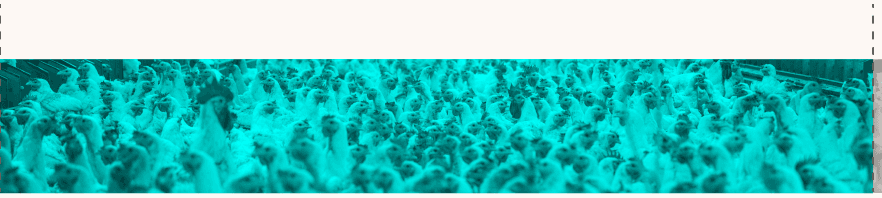
Billions of land animals and trillions of other animals are farmed each year. In the United States, around 99% of farmed animals are held in factory farms, where they are crammed together to maximize production efficiency. Egg-laying chickens, for example, are often confined to tiny cages where they are unable to open their wings without hitting the wire bars. Factory farms are typically characterized by poor welfare conditions, including mutilation and inhumane slaughter methods.
Even in the wild, animals can experience immense suffering from both human activity and natural causes. Ongoing research into animal sentience and welfare capacity has led many to argue these issues deserve more attention. Despite the scale of the problem, little funding goes into animal welfare, which means extra effort might make a real difference.
Inspired by the principles of effective altruism, researchers and advocates in this field try to figure out and implement the best ways to help animals.

Key problems

Egg-laying hens and broiler chickens

Billions of hens raised for eggs are held in small “battery” cages, where they are unable to freely open their wings. Globally, 75 billion broiler chickens raised for meat are slaughtered annually. In any given minute alone, an average of 140,000 chickens are slaughtered. Most broiler chickens are genetically selected to grow larger, which makes it hard for them to move and causes painful pressure on their abdomen. Male chicks of egg-laying hens are killed shortly after hatching. Animals are sometimes slaughtered while still conscious. The severity of these problems is substantial, yet there are cost-effective interventions that can significantly improve the welfare of farmed hens and chickens.

Pigs in gestation crates

On most industrial pig farms, pregnant sows are kept in gestation crates, metal stalls only about two feet wide, where the animal cannot turn around for all of her four-month pregnancy. Bans on these crates are an example of progress and ongoing work: voters in several US states have banned them by wide margins, the US Supreme Court upheld California's ban in 2023, and the UK, Sweden, Switzerland, and the EU have banned or restricted them. Support for ending the practice has come from across the political spectrum; even so, most sows in the United States are still kept in crates.

Neglected species

When you think about factory farming, animals like chickens, cows, or pigs probably come to mind. However, some of the animals most commonly killed for food are also the most neglected. People may find it less intuitive to empathize with animals like fishes or invertebrates, but they are extremely numerous and face similarly poor conditions in factory farms. For example, female breeder shrimps often have their eyestalks crushed to induce spawning. While this field is still developing, the evidence so far has led many to argue for taking a wider range of species seriously. As a result of this research, some animal welfare advocates have launched new initiatives to improve industry conditions.

Wild animals

In contrast to farmed animals, people often think of animals living in the wild as enjoying idyllic lives. But there is increasing awareness about the suffering these animals experience as a result of “natural” causes like starvation, disease, and predation. Human activity can also negatively impact wild animals. For example, hundreds of millions of birds die each year flying into glass windows; bird-safe glass exists, but is rarely used. Wild animal welfare is a complex problem, and advocates want to ensure their efforts don’t backfire and cause more harm than good. More research could help identify cost-effective interventions and where additional funding would help most.

Should animal welfare be a priority?

Many people who work on animal welfare chose to prioritize this cause area because they think it’s particularly important, relatively neglected, and there is a strong potential for real change.
How cause prioritization works

Importance

99%

of land animals in the US are held in factory farms
How bad is the problem?

It can be hard to wrap our minds around the scale of animal suffering.

Most animals raised for human use are held in factory farms. In 2022, there were more animals held in factory farms just in the US than there were humans on Earth. Worldwide, around 80 billion land animals are slaughtered for meat each year. If you add in birds, fishes, and invertebrates, this number rises to the trillions. The number of wild animals is harder to estimate, but the ranges are so large that researchers need to use a unit of measurement called sextillion, which equals one billion trillion.
Behind each of these incomprehensible numbers are individuals whose lives may be marked by profound distress, confinement, and mutilation, before ending with a painful death. If even some of these species matter morally, then animal welfare might be one of the biggest issues facing the world today.

Neglectedness

3%

of animal charity donations in the US go to farmed animals
How much of a difference would more resources make?

Farmed animal welfare receives very little funding.

In the US, 95% of donations to help animals go to organizations like pet shelters, 2% to animals in laboratories, and just 3% to farmed animal welfare. Shelters do valuable work, and many people have adopted a companion animal from one. Even so, this distribution does not reflect the scale of need. For every dog or cat euthanized in a shelter, more than 14,000 farmed animals are slaughtered in the US alone. Wild animal welfare is also largely neglected, with many potential funding opportunities.

Tractability

~150 million

hens freed from cages
How likely is it that the problem can be improved or solved?

Campaigns pressuring corporations to buy eggs from more humane suppliers are highly cost-effective.

A decade ago, effective altruism-aligned funders identified corporate cage-free campaigns as one of the most cost-effective ways to help farmed animals. The Humane League’s Open Wing Alliance secured cage-free commitments from over 2,800 corporations worldwide. Despite rising demand for eggs, the number of hens held in battery cages across the US, the UK, and Europe fell by 150 million between 2012 and 2025. During that time, the share of US hens in cage-free systems rose from 9.6% to 45.3%.
Inspired by this success, some advocates are trying similar corporate campaign strategies to improve the welfare of other farmed animals. Meanwhile, researchers continue to investigate the best ways of helping animals.

Interested in getting involved in animal welfare?

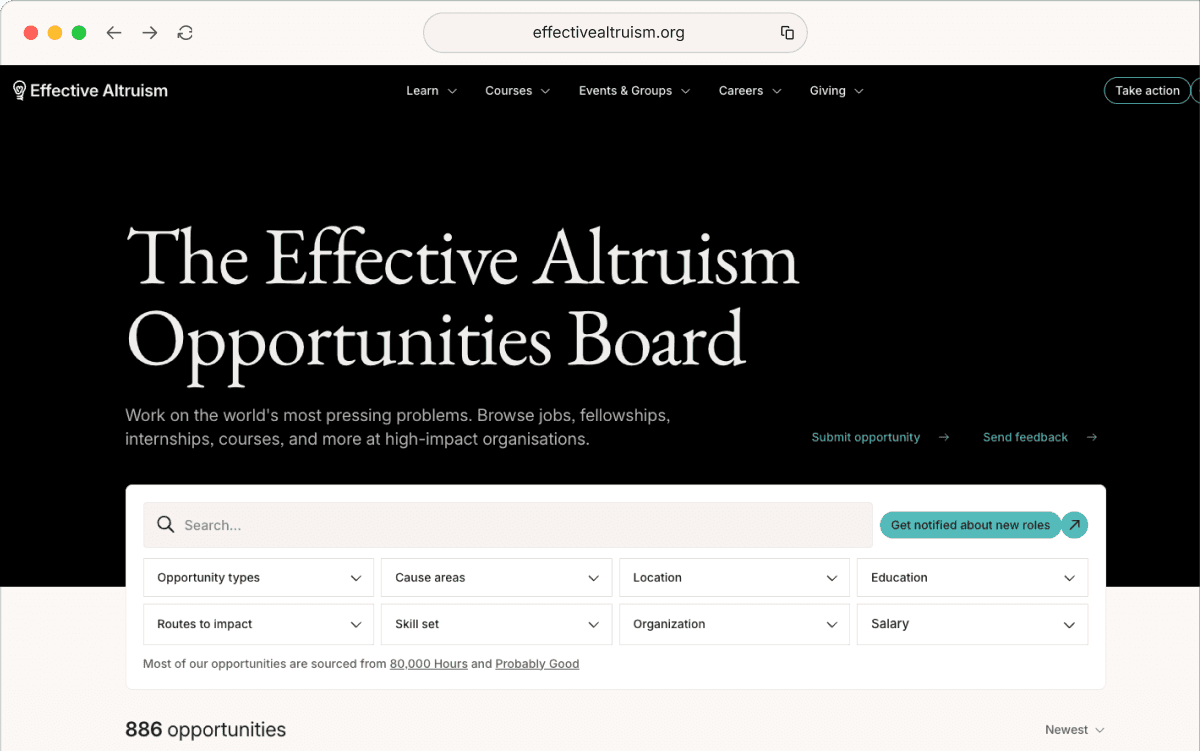
Search our opportunities board for full-time and part-time roles, fellowships, internships, volunteer opportunities, training programs, and events that could help you do more good with your career.
EA
Stories

Meet people using their careers to make a positive impact

Watch Lewis Bollard’s story
“Two principles really resonated with me: taking seriously the interests of people and animals geographically distant from you, and approaching charity as a quest to have the greatest impact possible.”
Lewis Bollard
Lawyer turned animal welfare grantmaker
Watch Jeff Sebo’s story
“If you might be able to suffer, and my actions are affecting you, then I should at least consider welfare risks when making decisions.”
Jeff Sebo
Philosophy PhD turned advocate for nonhuman minds
Read Andrés Jiménez Zorrilla’s story
“The financial sacrifice of moving from a job in finance to the animal NGO space was a challenge, but the promise of meaning outweighed the costs for me.”
Andrés Jiménez Zorrilla
Morgan Stanley investor turned animal welfare advocate

FAQs

What next?

Meet people working on animal welfare
Join effective altruism conferences and events to hear from others, explore different career paths, and build connections.
Learn more about animal welfare
Explore effective animal advocacy, including career paths, practical skills, and ways to make a difference for animals.
Explore the animal welfare fund
Funding organizations and projects that will help alleviate the suffering of millions or billions of animals.